
Why are the walls damp in my old house?
A damp patch is a clue. Where it appears and when it changes can help you work out where the moisture is coming from. Older walls can take time to dry, especially where later finishes restrict evaporation. Start by tracing the water before deciding what work to do.
Look for a pattern
If the patch grows after rain, check the roof, gutters, downpipes and the wall outside. A stain below a window could be linked to its sill or the joints around the opening. A patch that stays wet through dry weather may warrant a check for leaking plumbing or drains. Mould in cold corners or behind furniture can be a sign of condensation. More than one cause can be present.
Check ground levels and air bricks
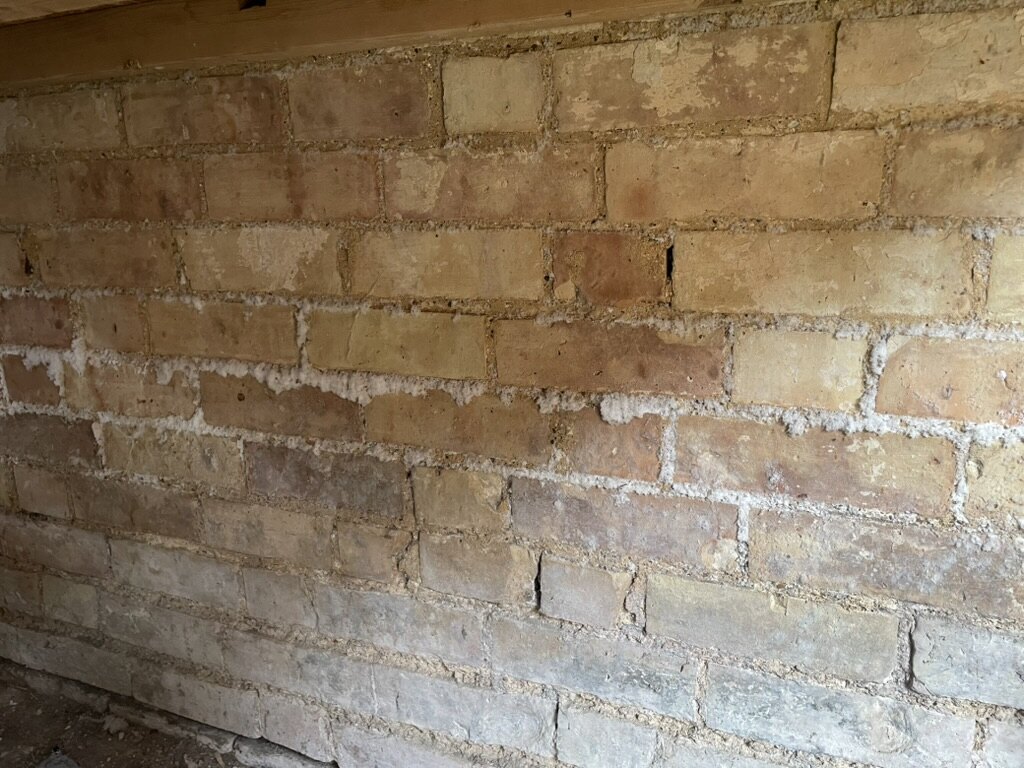
Look for soil or paving that sits high against the wall, puddles forming near the house, or a downpipe discharging at the base of the wall. A low-level stain or white salt deposits can be useful clues. They cannot tell you on their own whether moisture is rising from the ground.
If you have a suspended timber floor, check whether the air bricks are clear and whether air can pass under the floor. Read how air bricks ventilate a suspended timber floor.
Decide what to do first
Start with obvious defects such as a leaking gutter and allow time to see how the wall responds. If moisture persists or timber is soft, ask someone experienced with traditional buildings to investigate. They can check where water is entering, how the wall is drying and whether unsuitable finishes are contributing.
If the ground keeps the base of the wall wet, find out what a French drain does. Its suitability depends on the ground, foundations and where the water can discharge. Check those before digging.