
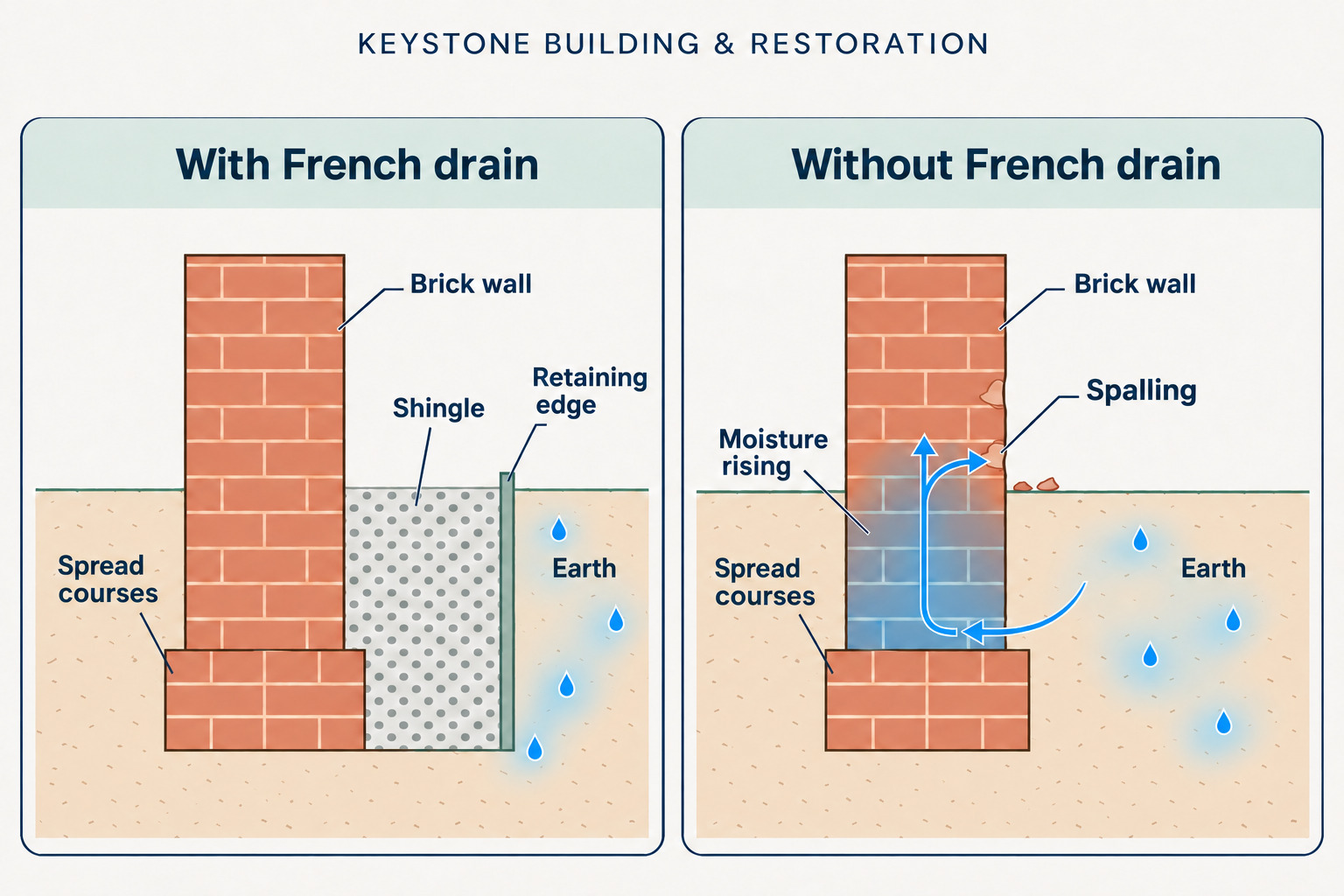
What is a French drain?
A French drain is a gravel-filled trench that gives water an effective route to drain away. It reduces prolonged wetting around the base of a wall from rainfall and moisture in the earth, so the masonry is exposed to less moisture and can dry out.
Still working out where the moisture is coming from? Start with the common signs of a damp wall.
Water moving through porous brickwork carries dissolved salts. As the water evaporates, salts crystallise within the brick’s pores. Crystal growth can exert pressure and cause the face of the brick to flake or crumble, known as spalling. Repeated freezing and thawing of wet brickwork can also cause damage. Surface salt deposits are different from damaging crystallisation within the brick.
Lime mortar is more permeable than the surrounding bricks, encouraging moisture and dissolved salts to move through the mortar joints. Salts crystallise within or on the surface of the mortar; the mortar can then weather sacrificially and be repointed, which helps protect the softer bricks from spalling.
In contrast, hard, dense cement pointing restricts evaporation through the joints, directing more drying through the softer bricks. Salt crystallisation within the brick can then contribute to spalling.
Choosing a mortar suited to the existing masonry and its exposure is therefore important to the long life of the brick. This is a general explanation, not a drainage design for a particular site.